
A subscription is required to display the requested content.
The license for (my.officite.com) is not active.
Dentistry's primary goal is to preserve your natural teeth and keep them healthy for as long as possible. However, there are certain situations when a tooth should be extracted (ie. removed).
Tooth extractions are usually a very routine procedure, and not to be feared when performed by an experienced dentist. Teeth are not rigidly fixed in its surrounding bone, but are actually attached to the bone via a network of fibers that form the periodontal ligament. By carefully manipulating the tooth, your dentist can detach these fibers and remove the tooth.
The two primary factors in determining whether an extraction is simple or complicated are the location of the tooth in the mouth, and the direction, size and shape of its roots. As an example, a front tooth with a single straight root is easier to remove than a molar (back tooth) with multiple curved roots.
Common Reasons for Extraction
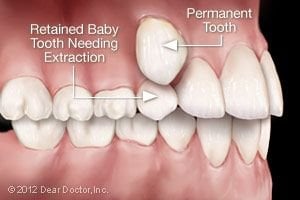
Baby Teeth: Some younger children may have a baby (primary) tooth out of position or past due to fall out, impeding the permanent tooth below it from erupting properly. In these cases, removing the baby tooth may prevent the need for orthodontic treatment in the future.
Orthodontic Treatment: Teenagers with crowded teeth may require extractions before orthodontic treatment to make space for their other teeth to be aligned properly.
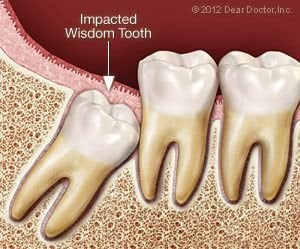
Impacted Wisdom Teeth: We may advise you to have your impacted wisdom teeth extracted if they seem likely to cause problems in the future.
Early removal of impacted wisdom teeth can prevent damage to adjacent healthy teeth, bone, gum tissue, even nerves and blood vessels. If an impacted wisdom tooth is in a bad position, it's best to remove it before its roots are fully formed.
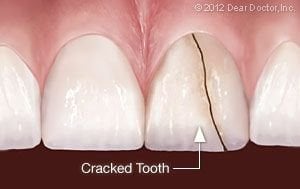
Trauma or Disease: An extraction may be necessary for a heavily decayed or damaged tooth that cannot be saved with a filling, root canal or crown.
The Extraction Procedure
The first step in any extraction is an x-ray and examination to assess the position of the tooth roots and the condition of the surrounding bone. This will allow any possible complications to be anticipated. A thorough medical and drug history is taken to ensure that you are healthy enough to undergo the procedure.
The extraction is usually carried out with a local anesthetic (freezing) to numb the tooth and the surrounding bone and gum tissues.
Depending on the situation, a small amount of lab-processed bone-grafting material is sometimes placed into the tooth socket after the extraction to help preserve the bone volume. This is particularly important when the extraction will be followed by a dental implant, which needs to fuse to existing bone, or for orthodontics (braces), which gently moves teeth through bone.
After the tooth is extracted, the socket will be covered with sterile gauze and gentle pressure applied for 10-20 minutes to control any bleeding. Small sutures (stitches) may also be used.
What to Expect After Tooth Extraction
It's normal to experience some mild to moderate post-operative discomfort and/or swelling, which can be alleviated with Extra Strength Tylenol. We may also prescribe antibiotics to ensure infection-free healing. Using ice packs on the outside of your jaw, and eating softer foods until you feel more comfortable can also be helpful. You should be fully recovered within a few days.
Smoking, vigorous brushing and rinsing, and drinking liquids through straws are discouraged during the post-operative period because they hinder healing and may cause the wound to open.