
Digital X-Rays
Advantages of Digital X-Rays
- Less radiation: Much less radiation is used to take digital x-rays as opposed to conventional film x-rays. Digital x-rays reduce the amount of radiation exposure to the dental patient by as much as 90%.
- Immediate results: Digital x-rays can be viewed almost immediately, without waiting for the film to be developed.
- Clearer images: Digital x-ray images can fine-tuned if required. We can change the brightness and contrast to produce a sharper image. The image can be magnified, which makes it easier to identify any hidden cavities or other areas of concern. We can also compare them on-screen to your previous x-rays, making even the minutest changes to your tooth structure easier to detect.
- Environmentally friendly: Unlike film, digital x-rays do not require any environmentally harmful chemicals for fixing and developing.
- Easy sharing and storage: Digital x-rays provide a better visual aid for you to understand your diagnosis and treatment options. The digital images are stored on our secure computer system and can be easily accessed and reviewed during future visits. They can also be quickly emailed to a dental specialist when required.
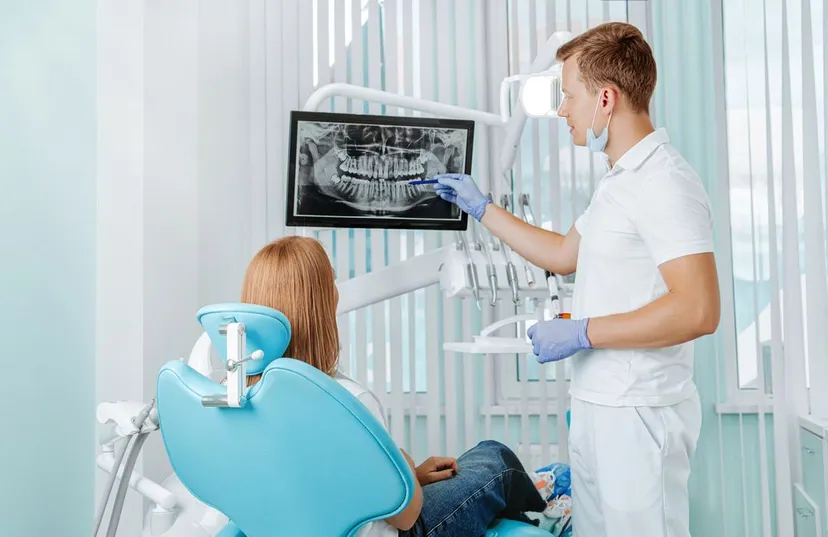
Why Do I Need Digital X-Rays?
Even with an in-depth, detailed examination, a dentist can only see your teeth and any visible problems above the gum line. Crucial parts of your mouth, such as your roots, pulp, bone and the contact areas in between your teeth are hidden from view. Digital x-rays show these hidden areas in great detail, and can reveal infection in the pulp and the surrounding bone, along with cavities that often develop in the contact areas between your teeth.
How often you need dental x-rays is dependent on your dental health and medical history. Patients with certain medical conditions or a higher risk of dental disease will be advised to have more frequent digital x-rays, but only when required. Dental x-rays may also be required if you have a dental injury, a toothache or before certain dental procedures such as a root canal or an extraction.
Types of Digital Dental X-Rays
Digital dental x-rays can be taken either inside your mouth (intraoral), or outside (extraoral). Intraoral digital dental x-rays are the most frequently used x-rays, providing enormous detail about the current condition of your teeth.
Intraoral x-rays include:
Bite-wing X-Rays: Bite-wing x-rays are frequently used for detecting decay in between teeth, to check the condition of bone around teeth and to assess the fit and integrity of dental restorations including crowns and fillings. .
Periapical X-Rays: A periapical x-ray shows the entire tooth from its crown to the tip of the tooth root, as well as the bone surrounding the tooth. Periapical x-rays are useful in detecting dental abscesses and for assessing bone loss around the tooth which can occur if you have advanced gum disease.
Extraoral x-rays include:
Panoramic X-Rays: A panoramic x-ray is taken by a machine that rotates around your head, providing a single detailed image of all your teeth in your upper and lower arch. Panoramic x-rays are very useful for assessing impacted wisdom teeth and other jaw problems, and for planning dental treatments including implants.
Cephalometric X-Rays: Ceph x-rays capture a full side-view of your skull and neck, and are generally used to diagnose skeletal development and growth trend involving the head, neck and jaw. They are one of the x-rays required to determine orthodontic treatment.
X-Rays and Your Safety
The health and safety of our patients and staff is our highest priority at Scarborough Dental Care. Digital dental x-rays are extremely safe, and our dental team at Scarborough Dental Care are highly trained in operating all radiographic equipment. The x-ray equipment in all treatment rooms were newly purchased in Sept 2019, and are certified for safety annually. Although exposure to radiation is extremely low, we take every precaution to keep our patients safe during all treatments.
Any patient having x-rays taken will be covered with protective lead aprons and thyroid collars to limit their exposure even further. Although we usually delay taking x-rays during pregnancy until after the baby is born, it is safe for pregnant women to have digital x-rays taken during a dental emergency. Moreover, to eliminate any possibility of cross-contamination and infection, digital x-ray plates are wrapped with protective plastic barriers that are discarded after every patient.
Digital x-rays are an indispensable tool in detecting, diagnosing and treating dental problems. If you have questions about digital x-rays, please feel free to ask any of our dental team.